
Watercolour Portrait vs Oil Portrait – What to Expect?
If you’re considering commissioning a portrait, the first question usually isn’t whether you want one – it’s what kind. Watercolour and oil portraits can both be deeply personal, heirloom-level pieces, but they behave very differently as mediums. That affects everything from how the portrait feels, to how it’s displayed, to what you can reasonably expect from the process.
This guide will help you choose with clarity (and without the jargon).
The short version
A watercolour portrait tends to feel luminous, airy, and emotionally immediate – with beautiful softness and intentional edges. An oil portrait tends to feel rich, weighty, and sculptural – with more opacity, deeper layering, and a different kind of permanence.
Neither is “better.” They simply tell the truth in different ways.
1) The overall look and mood
Watercolour portraits
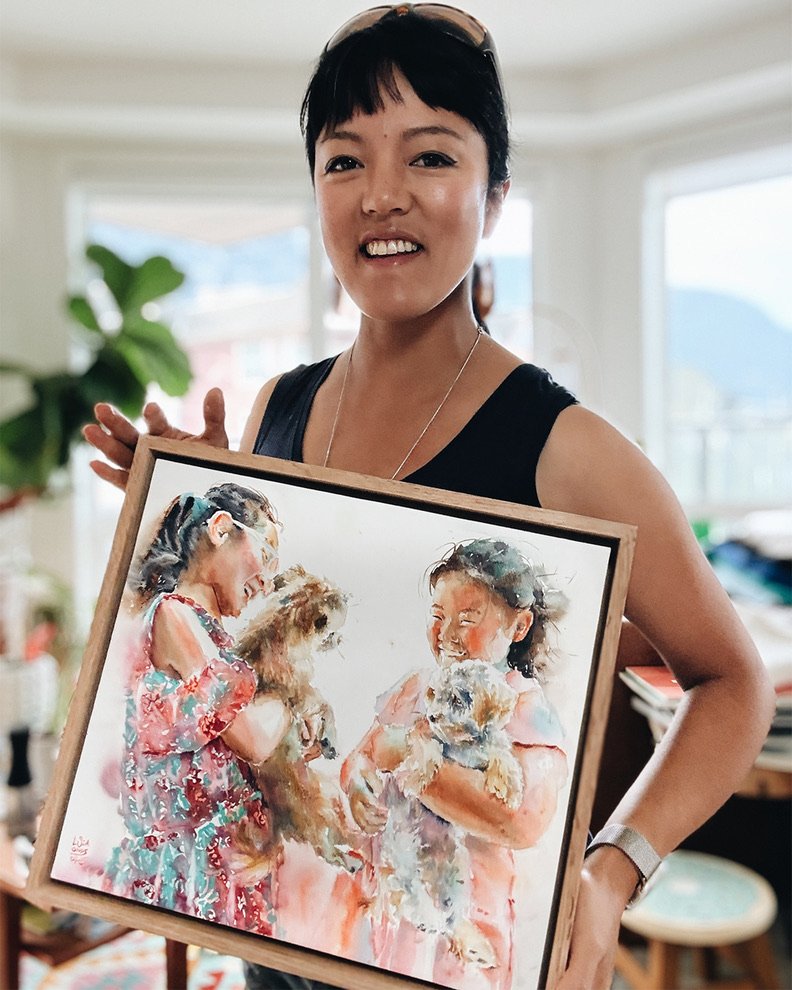
Watercolour is transparent by nature. Light travels through the pigment and bounces back from the paper, which creates that unmistakable glow. In portraits, this often reads as tenderness, vulnerability, and atmosphere.
You can expect:
A sense of lightness and breath
Soft transitions and selective detail
A more interpretive, expressive feel (even when the likeness is strong)
Watercolour is especially beautiful for children’s portraits, memorial pieces, and work where you want the emotion to lead.
Oil portraits
Oil paint is opaque and can be built up in layers. It can create a strong sense of structure – the feeling that the face is “formed” rather than suggested. The colour depth can be extraordinary, and the surface can feel almost sculpted.
You can expect:
Rich colour and deeper shadows
Stronger realism through layering
A more classic, formal presence (if that’s the direction you want)
Oil can be ideal for traditional heirloom portraits, formal settings, and collectors who love that museum-style finish.
2) Detail, realism, and what “accuracy” really means
This is where expectations matter.
A portrait can be accurate in more than one way. There’s the accuracy of likeness (does it look like them?), and there’s the accuracy of presence (does it feel like them?).
Watercolour often prioritises presence through light, shape, and story. Oil often prioritises presence through form, depth, and layering.
If you want every detail rendered crisply, oil may be the more natural fit. If you want something that feels alive and honest – with a little breathing room – watercolour can be stunning.
3) Corrections, revisions, and flexibility
Watercolour
Watercolour is less forgiving because it’s transparent and the paper matters. Some adjustments are possible (lifting, glazing, reworking areas), but it’s not a medium where you can endlessly repaint without consequences.
That’s why the planning stage matters so much – reference photo choice, composition, and value structure.
Oil
Oil is generally more flexible for revisions because you can paint over areas opaquely and continue refining. It also dries slowly, which can help with blending and adjustments.
That said, more flexibility doesn’t always mean a better process – it just means the medium allows different kinds of changes.
4) Timeline and drying time
Watercolour
Watercolour can be completed faster in terms of painting time, but it still requires careful drying between layers and a thoughtful pace. The bigger factor is often the artist’s process and queue.
Oil
Oil portraits usually take longer because of layering and drying time. Even after the painting is “done,” oils can take weeks to months to fully cure before varnishing (depending on technique and thickness).
If you’re working toward a deadline (a birthday, anniversary, or memorial date), timeline is worth discussing early.
5) Display, framing, and longevity
Watercolour display
Watercolour is typically framed behind glass to protect the paper. It’s important to use archival materials (acid-free matting, proper backing) and ideally UV-protective glass.
Watercolour portraits do best when:
Kept out of direct sunlight
Protected from humidity and temperature swings
Framed professionally with archival care
Oil display
Oil paintings are usually displayed without glass. They may be varnished for protection and colour depth. Oils are durable, but they still need sensible care (no harsh cleaning products, avoid direct sun, stable environment).
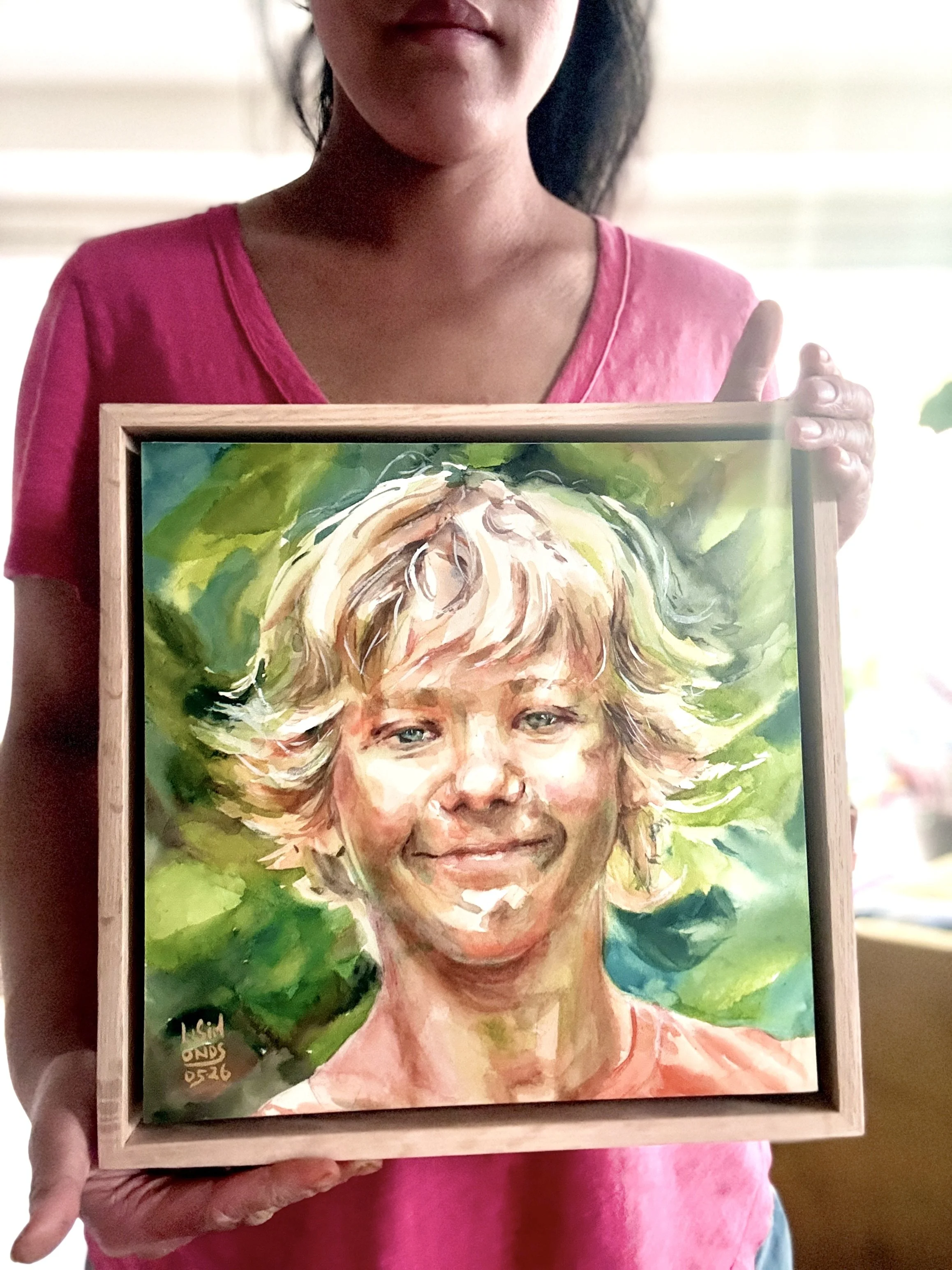
Ask me about my contemporary mounting options for watercolour
6) Cost: why pricing can differ
Pricing varies widely by artist, size, and complexity, but here are a few reasons oils can sometimes cost more:
Larger canvases are common
Longer timelines and drying stages
Layering and materials can be more intensive
Watercolour can also be premium-priced, especially for artists with a strong signature style and high demand. The real question is not “which is cheaper?” but “which outcome do I want to live with on my wall for years?”
7) Which one is right for you? (A simple decision guide)
Choose a watercolour portrait if you want:
Luminous light and a sense of softness
A portrait that feels emotionally open and expressive
Something that reads as both realistic and artistic
Choose an oil portrait if you want:
Rich depth, opacity, and a classic finish
Strong form and layered realism
A more traditional, formal presence
If you’re still unsure, the best next step is to look at examples and ask yourself: Which one feels like home?
Commissioning a portrait: what I recommend either way
No matter the medium, your experience will improve dramatically if you:
Choose a strong reference photo (lighting and expression matter more than “high resolution”)
Talk about mood and intention, not just likeness
Agree on size, timeline, and revision points upfront
A portrait isn’t just a picture of someone. It’s a way of honouring a life, a relationship, a season, a story.
Ready to commission a watercolour portrait?
If you’re drawn to watercolour’s light and honesty, I’d love to help you explore what’s possible. You can reach out through my website to discuss your idea, timeline, and reference photos.
If you’d like, tell me who the portrait is for (child, partner, memorial, pet), and what you want it to feel like – and I can suggest the best direction.